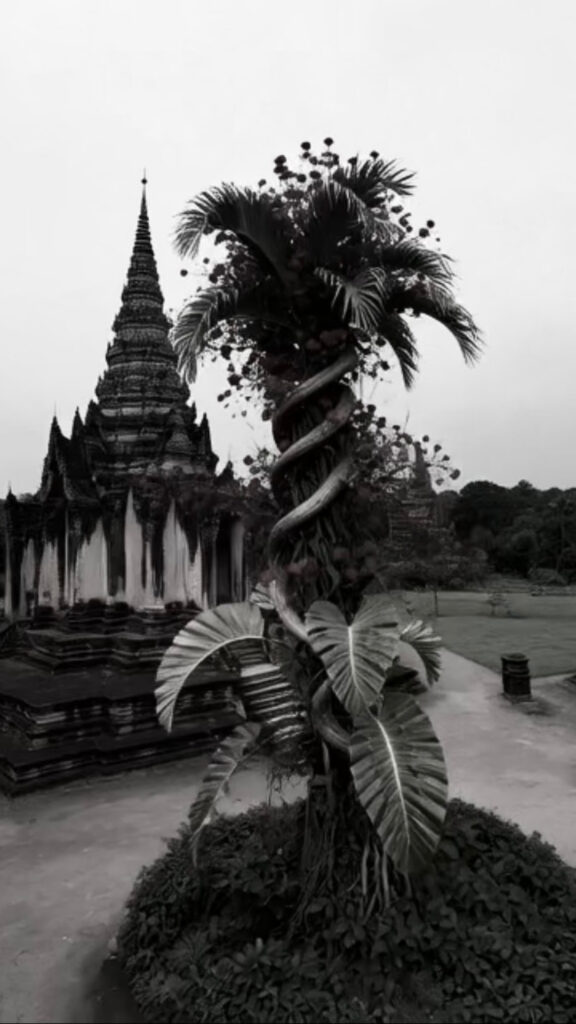
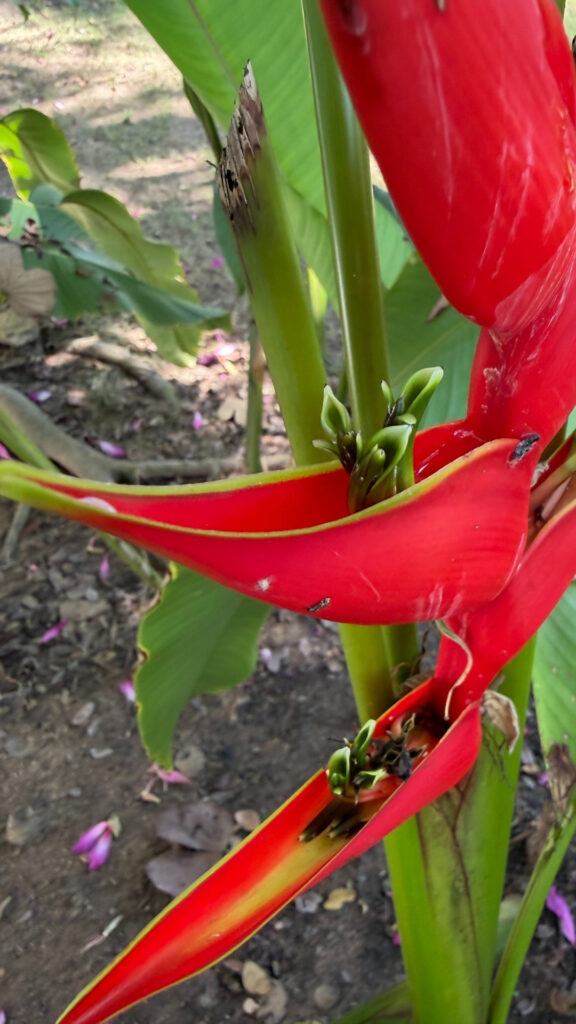
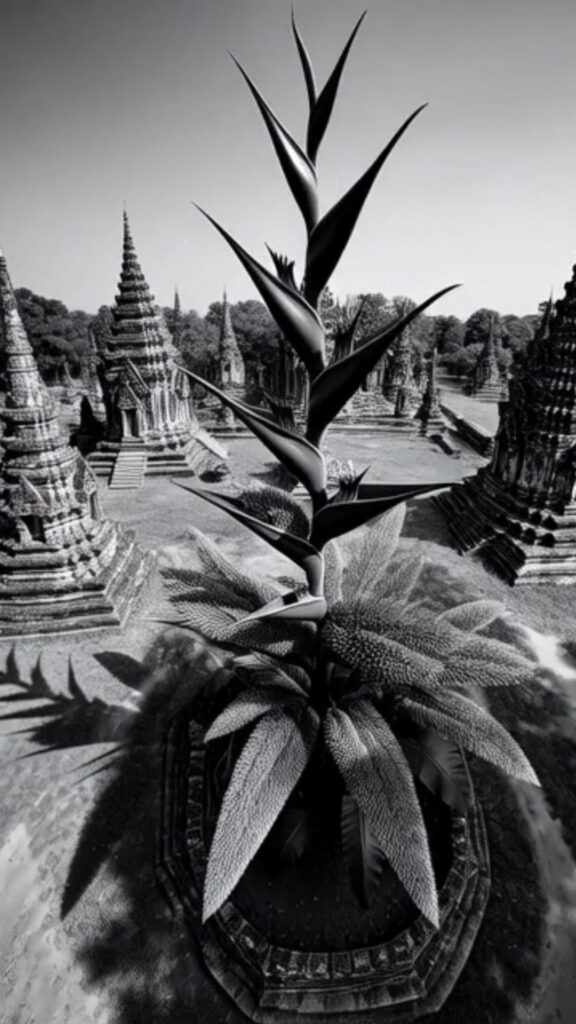
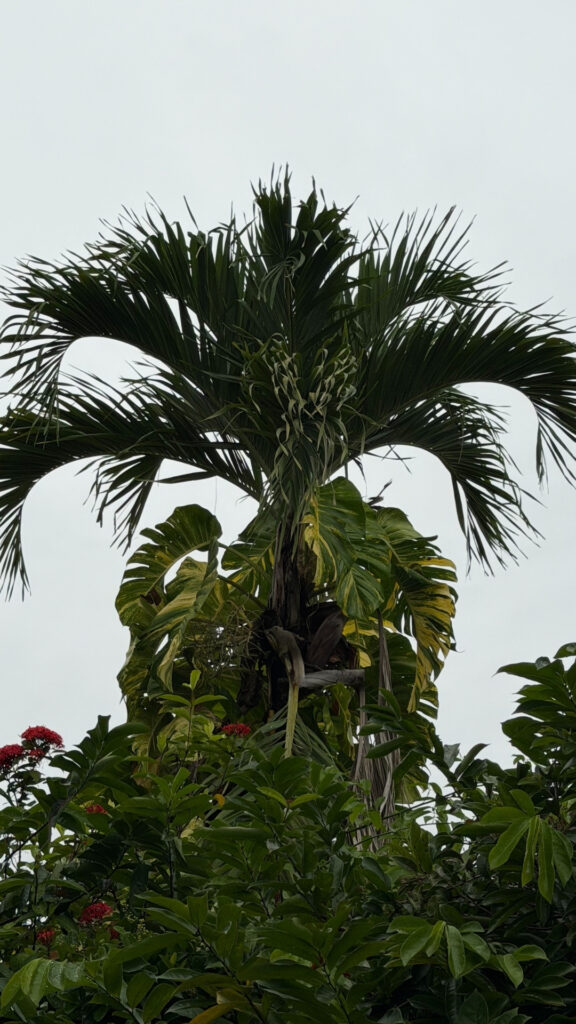
Botanical Fantasia is an experimental botanical film that transforms real-world plants into speculative, fantastical organisms. The project begins with organic footage of everyday tropical plants—species we pass by without noticing—and gradually evolves them into surreal, impossible forms using AI-assisted visual morphing.
Through this metamorphosis, the film seeks to reveal the extraordinary beauty hidden within the plants we often overlook.
Artistic Intent
Botanical Fantasia seeks to reawaken the viewer’s ability to notice, appreciate, and emotionally connect with the living world that surrounds us. Modern life often renders plants invisible—quiet companions we pass every day without truly seeing. Through speculative evolution, magnified textures, and magical transformations, this project reframes ordinary botanical forms as extraordinary beings with presence, strength, and personality.
By exaggerating the natural structures of real plants, the work aims to shift perception: to make familiar species feel wondrous again. Each evolving form becomes a metaphor for the hidden resilience of nature and a reminder that beauty is often found in overlooked places. The intent is not to depict fantasy for its own sake, but to use imagination as a way of restoring sensitivity—inviting viewers to pause, observe, and rediscover the enchantment of the natural world.
Ultimately, Botanical Fantasia positions plants as silent storytellers, bridging reality and imagination, and encouraging a deeper sense of curiosity, empathy, and ecological awareness.
Visual & Technical Approach
Original plant photography captured during travels in Thailand and Southeast Asia
AI-driven evolutionary transformation based on real botanical features
Texture enhancement inspired by scientific illustration and sci-fi morphologies
Monochrome and muted palettes evoking archival herbarium aesthetics
The film merges observation, imagination, and technology—sitting between documentary and fantasy
Future Development
Botanical Fantasia is envisioned as the foundation for a larger immersive project. Future directions include:
• XR / AR botanical installations Where audiences can walk among evolving plants, observing growth from seed to mythical form.
• Interactive digital gardens Viewers can “grow” their own fantastical species based on real plants.
• Educational-artistic hybrids Pairing original plant footage with evolutionary interpretations to foster curiosity about biodiversity.
• Public art experiences Encouraging passersby to stop and notice the plants around them—perhaps for the first time.
Ultimately, the project hopes to inspire a subtle shift: that one day, when someone walks past a familiar plant, they will pause, look closer, and recognize its quiet magic
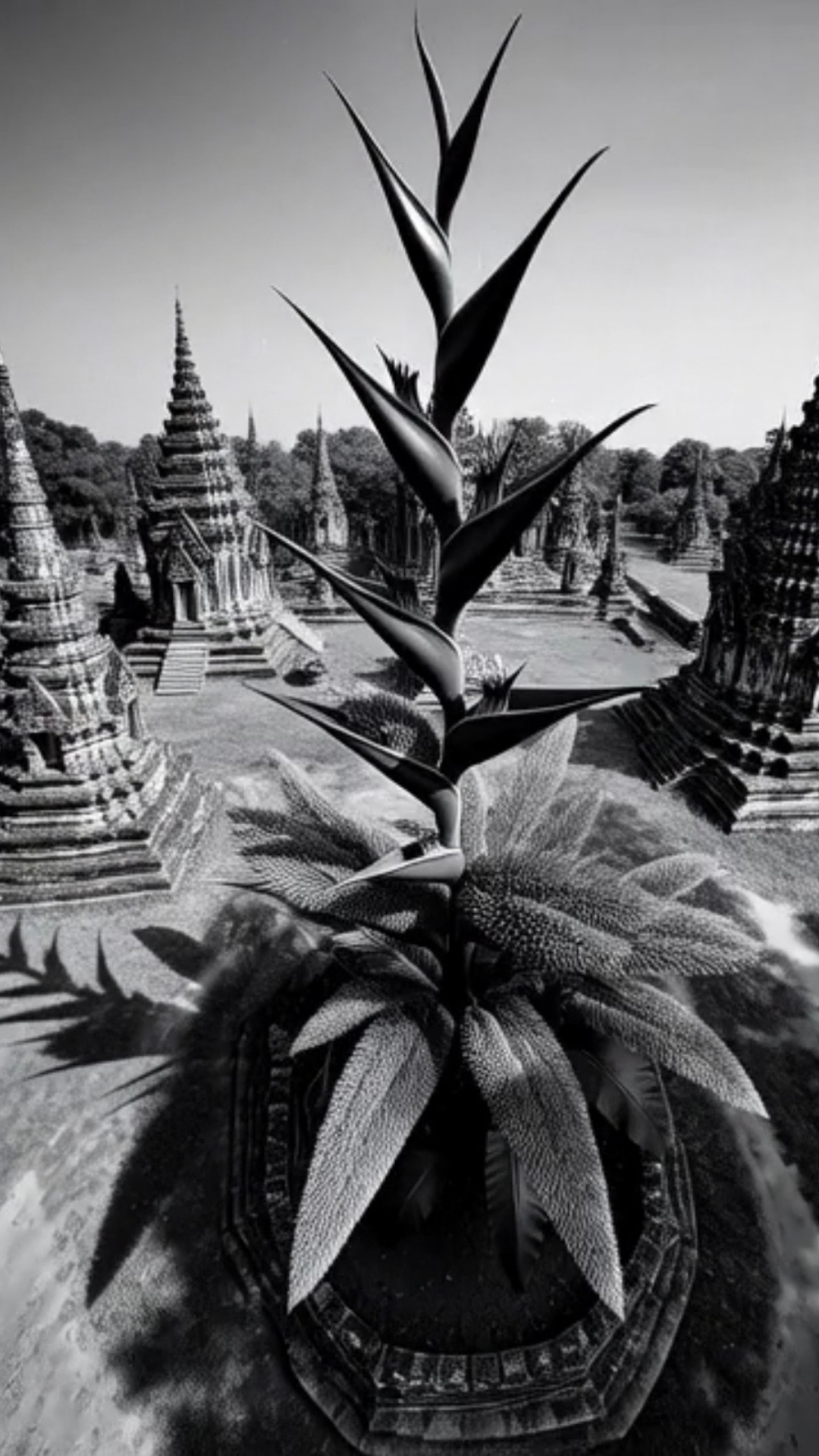
Characteristics: Its bracts rise in long, tapering blades that stack upward like a ceremonial sculpture, each segment catching light with a quiet metallic sheen. The lower leaves develop a fine reptilian texture, giving the plant an armored presence. When wind or footsteps pass nearby, the upper blades make subtle adjustments—almost imperceptible, yet enough to suggest that the plant is listening. Its elongated silhouette and sharply defined shadow create the impression of a silent guardian standing watch over ancient grounds.
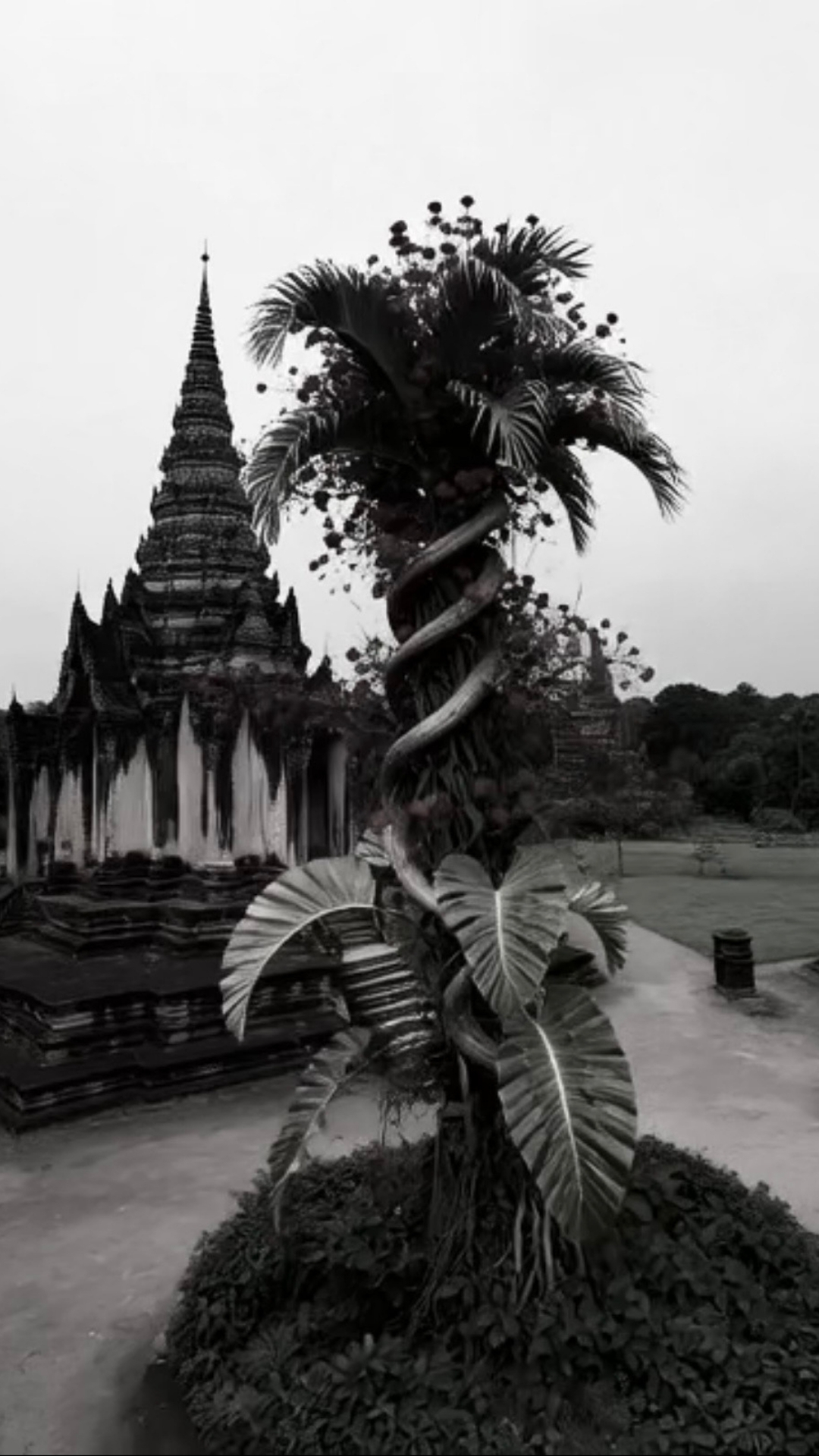
Characteristics: Its trunk rises in a clear vertical column, while the crown unfurls into layered fronds that curl like wind-shaped ribbons. Epiphytic vines weave through the upper canopy in natural spirals, shifting softly with each breeze. The whole form feels architectural yet organic—like a living tower shaped by the forest. In sunlight, the fronds cast intricate overlapping shadows, creating the sense of a suspended oasis between earth and sky.
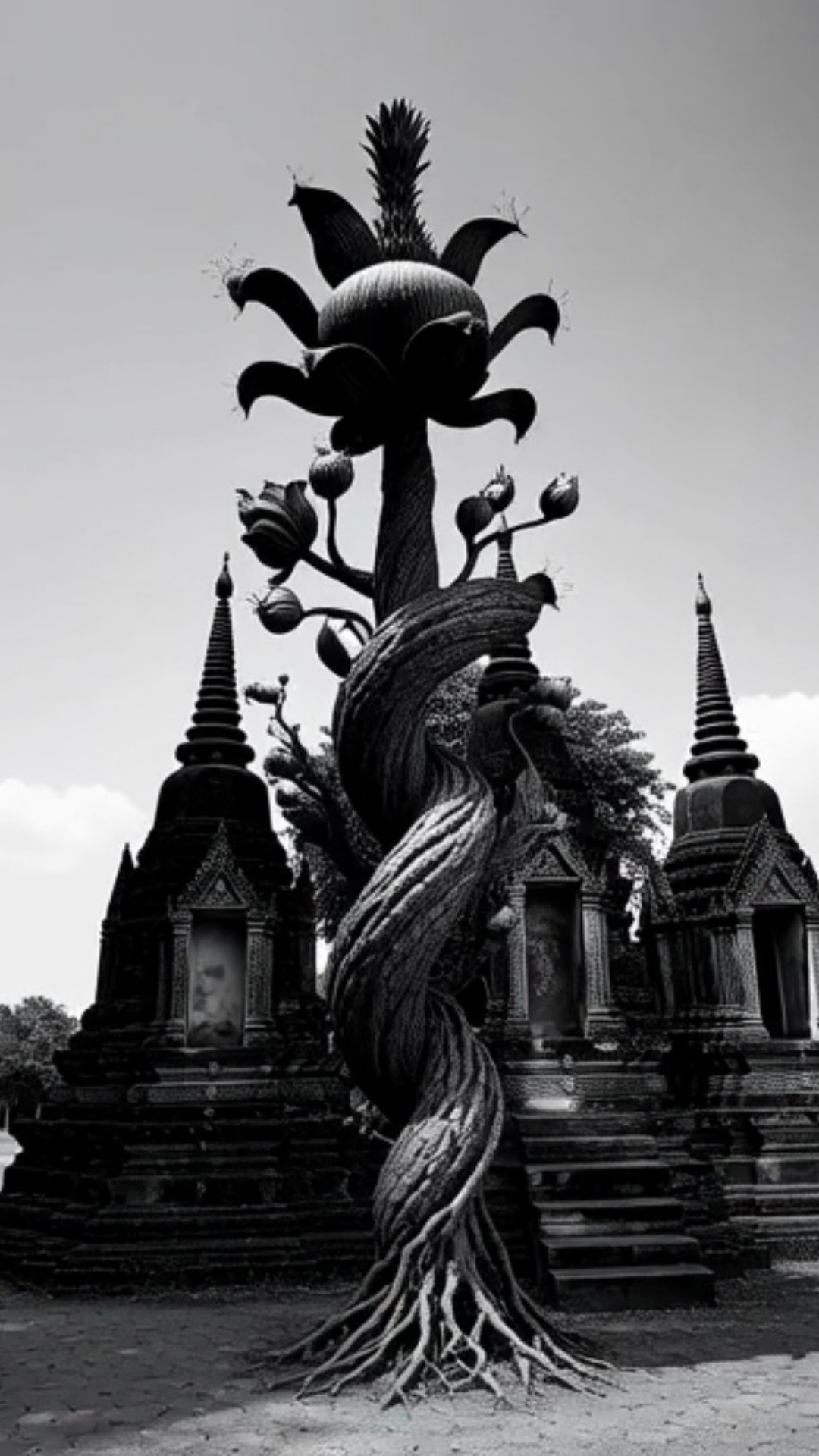
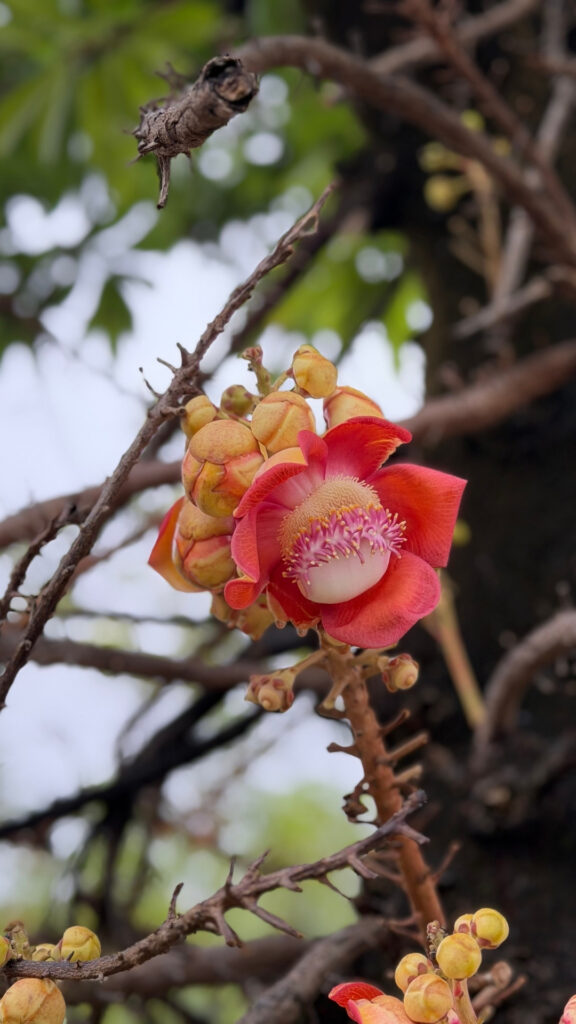
03. Couroupita Floris Lumina
Evolved from: Couroupita guianensis — cannonball tree flower
Classification: Speculative Luminous Ritual Flora
Habitat: Sacred forest clearings; ancient shrine steps; humid lowland groves
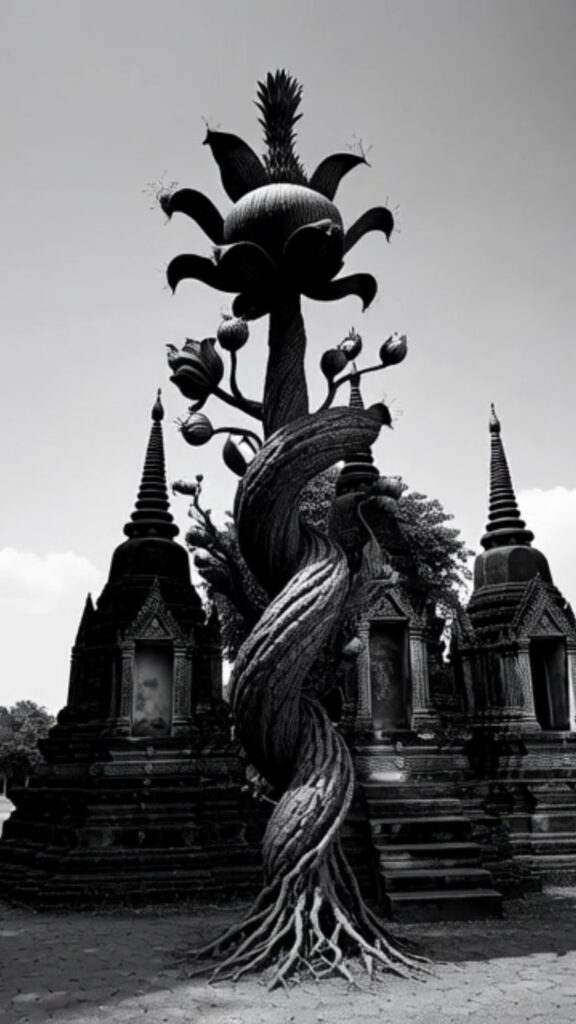
Characteristics: Its blossoms expand into softly glowing bowl-shaped forms, as if storing strands of captured sunlight. Layered petals open in graceful arcs, revealing textures reminiscent of coral and ancient ceremonial pottery. Fine filaments radiate outward in slow, shimmering motion. Against temple stone and dense forest, the flower feels like a quiet emissary—radiant, watchful, and endlessly unfolding.
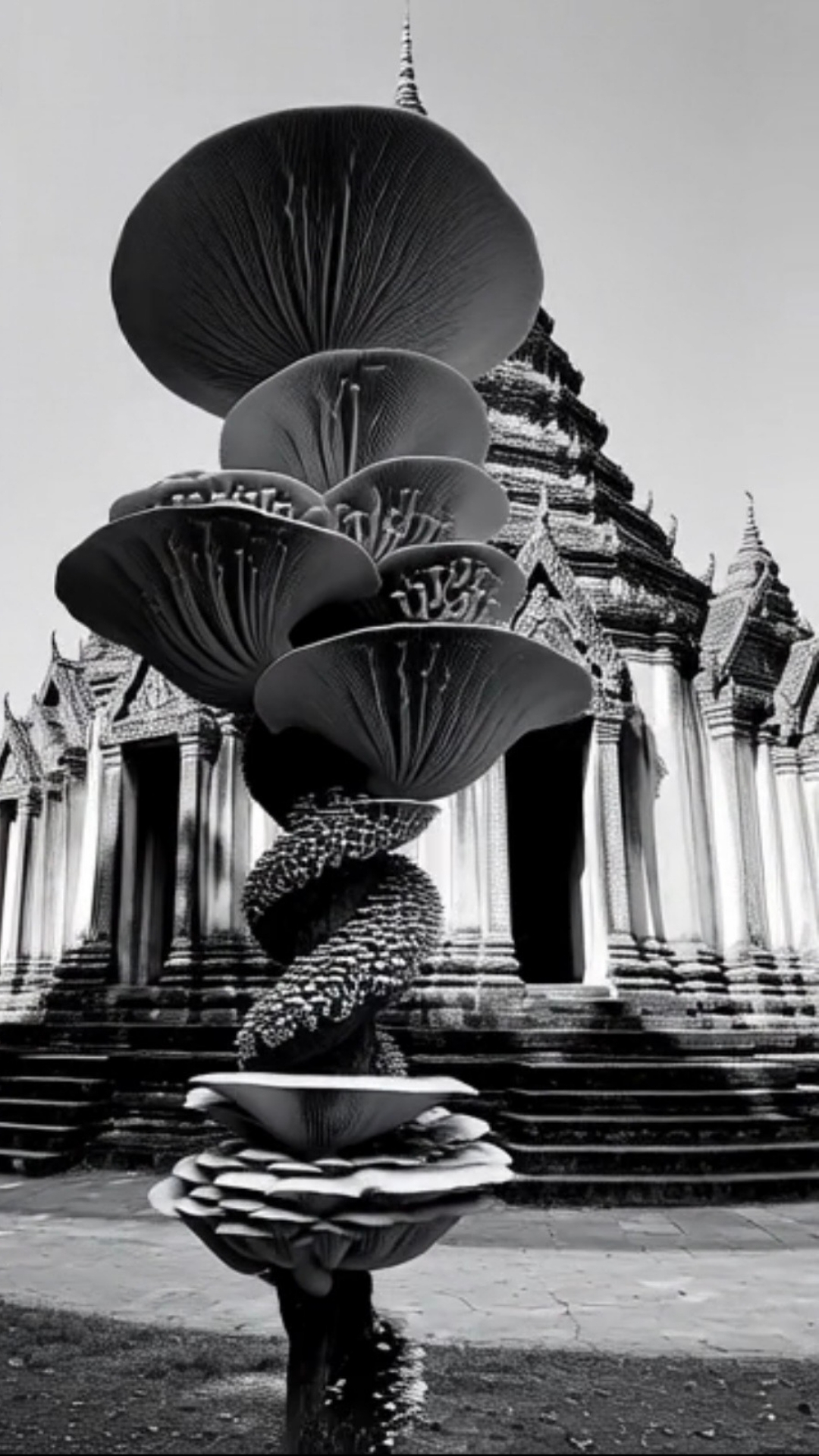
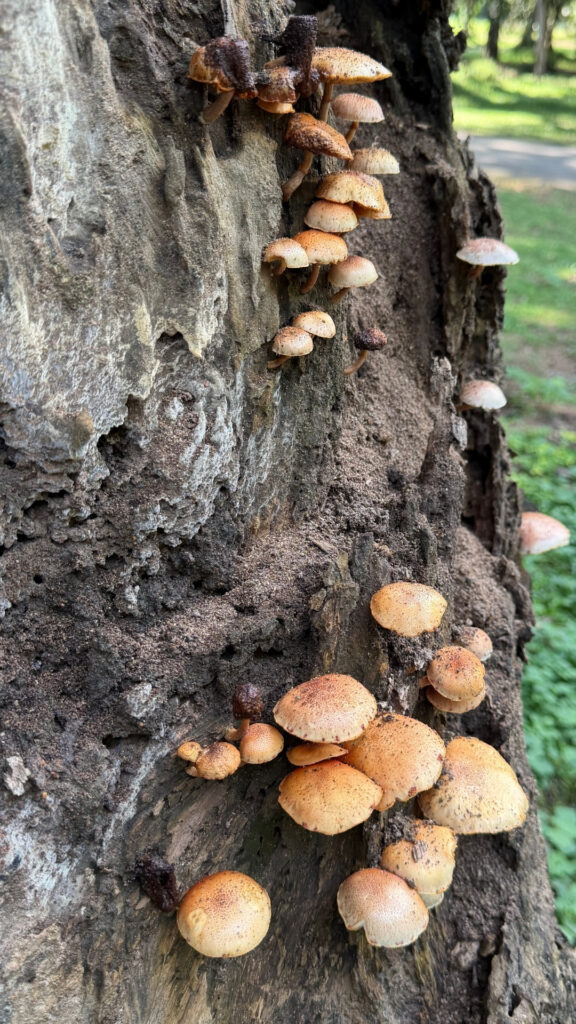
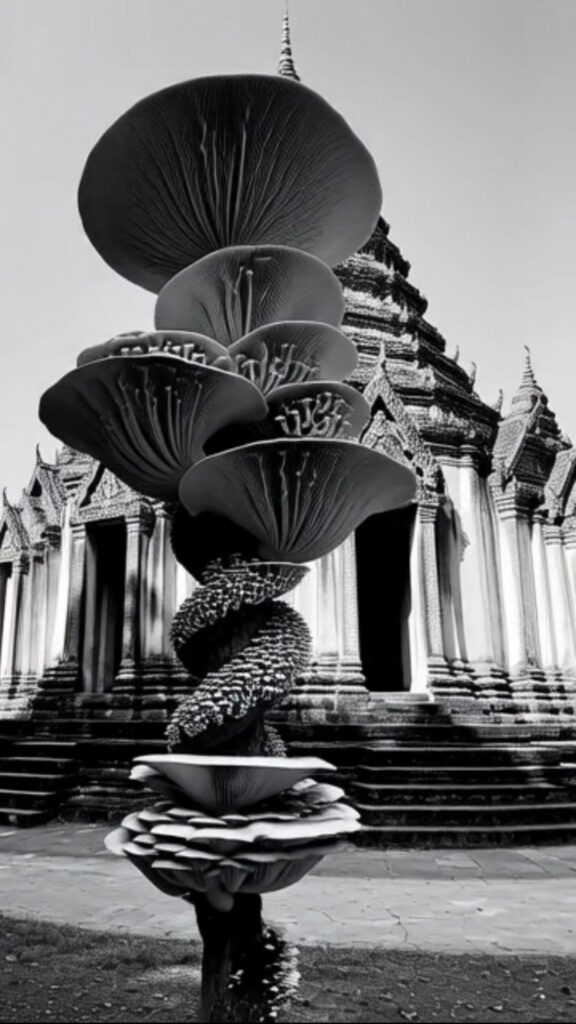
Habitat: Shaded forest trunks; decomposing woodlands; moisture-rich grove bases
Characteristics: Its caps cluster in rising terraces, forming gentle steps like a moonlit amphitheater. The delicate ridges shift tone as light passes over them, creating the impression that each layer is humming quietly. The formation spreads in natural spirals from its base outward, as if guided by an unseen rhythm. Though still, it carries the aura of a collective intelligence connected through hidden mycelial threads.